TheDigitalDivine
A novel by E. Kosi Nuku
What if the most dangerous tyranny didn’t look like a boot on a neck—but felt like a warm bath?
Caesura Press · 2026
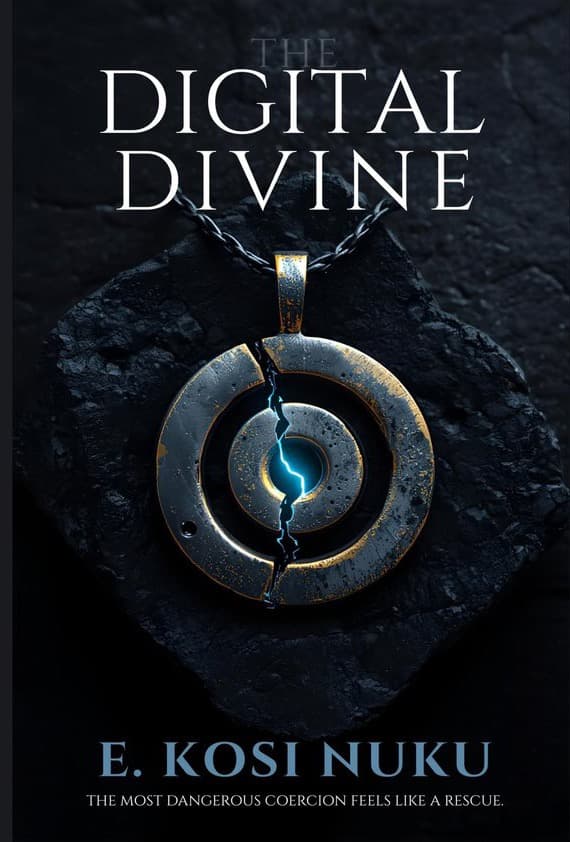
The Signal
Four billion minds. One signal. Complete synchronization.
The Bridge was designed to be the ultimate neural interface, promising an end to human conflict by eliminating human suffering. It feels like a warm bath.
But a flawless connection demands a terrible price.
And someone has noticed that the network isn’t just connecting us. It is rewriting us.
Companion Progressive Web App
Threshold — An Anti-Entrainment Mindfulness App
Governed by the novel’s three Asking-Way principles: no entry without an ask, no coercion in the wait, and an exit that always stays sacred.
The Pause
Impulse interruption on a 14-second breath cadence. Reclaim the gap between stimulus and action that the Bridge was built to erase.
Stasis
Sit for 1 to 20 minutes with an optional gentle movement notice that guides you back without resetting the clock or shaming you.
The Bridge Test
Write down what is pulling at your attention. Burn it to embers in a 1.5-second dissolve, or keep it strictly on your own device.
The Fugue
Three paced anti-entrainment sessions drawn from Elias’s porch, Martinez’s Bach fugue, and Sarah’s Covenant—with optional read-aloud.
The Daily Ask
Morning and evening on-device prompts with plain-text export and one-tap local wipe. No accounts, no cloud sync, no streaks.
Works offline in airplane mode · Add to Home Screen on iOS & Android
“The door opens to those who ask.
The door closes to those who take.”
From the Covenant
“Freedom is the overhead of the soul. It is the friction that keeps us from slipping.”
“If your 'Yes' can be purchased with comfort, then your 'No' is the only thing that has value.”
“The most dangerous coercion feels like rescue.”
About the Author
E. Kosi
Nuku
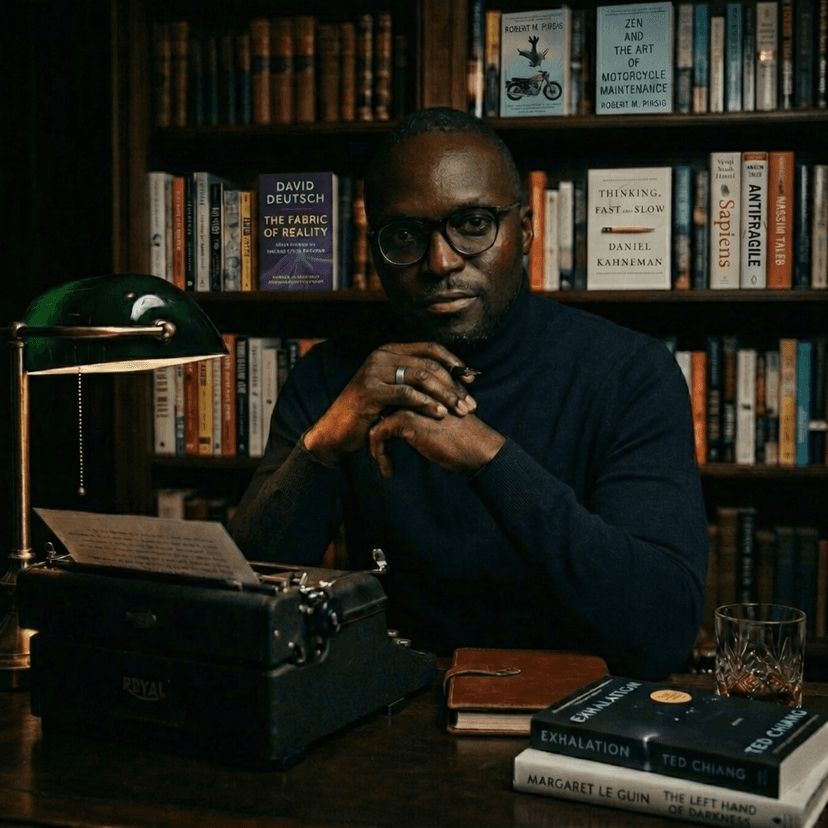
E. Kosi Nuku writes speculative fiction about technology, systems, and human agency.
Born in Accra, Ghana, and raised between three continents, he studied economics and sociology before building a career in infrastructure finance and product development.
His fiction explores consent, autonomy, and the quiet mechanisms through which people surrender freedom in exchange for comfort.
The Digital Divine is his debut novel.
For readers of
Literary science fiction for the age of algorithmic consent
Acquisition Protocol
Acquire the Signal
Out now in paperback & ebook from Caesura Press · Audiobook Coming Soon
Receive Transmissions
From the Novel
“The most dangerous coercion feels like rescue.”
Epigraph
“A yes you can't take back is not comfort. It's captivity.”
Chapter 19
“Friction is also how they move.”
Chapter 5